Year: 2026
What Government Support Can’t Do for Your Japan Market Entry
Expanding your business into Japan is one of the most promising growth opportunities a global company can pursue. However, it can also be one of the most complex.
When planning your market entry, you’ll likely encounter a vast ecosystem of support: government entities like JETRO, local municipalities, vibrant startup hubs, specialized administrative firms, and recruiters. Each plays a valuable role, but none of them solve the single most critical challenge: defining and executing the right strategy tailored strictly to your commercial success.
That is where Invision Japan comes in. We specifically enable pharma and medical device companies to navigate regulatory and commercial landscapes to successfully enter and thrive in Japan. We don’t replace existing market entry infrastructure like JETRO—we complement it, acting as your dedicated strategic compass.
Navigating the Japanese Market Entry Landscape
To understand why Invision Japan is essential, it helps to look at how other resources function:
- Government Organizations (e.g., JETRO & Local Municipalities)
JETRO provides exceptional, free support—including dedicated advisors, market entry information, visa assistance, and temporary office spaces. However, as an institutional facilitator focused on public FDI and economic growth, JETRO acts primarily as a neutral matchmaker when connecting foreign and local businesses. They facilitate introductions, but they do not negotiate commercial terms, execute your sales strategy, or advocate solely for your commercial interests in the market.
- Startup Communities & Incubators
These spaces offer great networking opportunities, but their business models often revolve around identifying investment opportunities, selling office space, memberships, or managing fixed hub programs.
- Logistics & Legal Entry Specialists
Administrative firms excel at the tactical mechanics: setting up a Godou Kaisha (GK) or Kabushiki Kaisha (KK), navigating visas, or handling tax registration. However, checking off legal compliance does not guarantee product-market fit or commercial traction.
- Recruitment Agencies
While recruiters sometimes provide generic advice on the market entry process, their primary focus is placing candidates to earn placement fees. Talent acquisition is vital, but hiring local staff before establishing a clear market strategy often leads to misaligned hires and wasted resources.
The Invision Japan Difference: A True Strategic Partner
Unlike transactional service providers or neutral facilitators, Invision Japan is uniquely positioned as a true, aligned partner.
Unlike other market entry advisors, we don’t push real estate, handle corporate filing paperwork, or place candidates. Having built companies ourselves, our core focus is guiding healthcare businesses through every stage of this journey with a crystal-clear go-to-market strategy: defining, testing, and refining your Japanese market entry strategy.
How We Complement Your Journey
Think of Invision Japan as your strategic quarterback. We work alongside government programs, recruitment firms, and local administrative specialists to make sure you use them effectively, at the right time, and for the right reasons.
- Objective Market Strategy: We help you evaluate true product-market fit, target customer segments, clinical needs, and competitive landscapes without bias.
- Conflict-Free Guidance: Because we don’t profit off corporate incorporation fees or headcount placement, our advice is purely driven by what makes commercial sense for you.
- Maximized ROI on Local Resources: We ensure that when you interact with JETRO, pitch to local partners, or hire your first local executive, you are doing so with a razor-sharp strategy that maximizes your odds of long-term success.
Ready to Enter Japan with Confidence?
Expanding into Japan doesn’t mean choosing between government support and legal specialists—it’s about defining the strategy that will lead to success and executing it effectively.
Because we have been in your shoes, we understand the full landscape of options in the healthcare sector and provide the actionable insights needed to avoid costly, common mistakes. We bring value across every critical pillar:
- Strategy: Building a grounded, adaptable roadmap tailored specifically to the Japanese healthcare and regulatory market.
- People: Providing crucial input on key hiring decisions to find the exact talent capable of executing your strategy.
- Connections: Bridging the gap to Key Opinion Leaders (KOLs), clinicians, and industry decision-makers to accelerate trust and adoption.
Partnering with Invision Japan gives you an advocate who sits on your side of the table, ensuring every resource you deploy aligns with a strategy built to win.
Contact Invision Japan Today to discuss how we can help shape your roadmap to success in Japan.

Japanese MedTech Dealers: The Hidden Value Most Foreign Companies Miss
Japanese medical device dealers play a distinct and often misunderstood role in one of the world’s largest healthcare markets. Understanding exactly what they deliver—and how to align compensation with real performance—is essential for any company building a sustainable presence in Japan.
Dealers Core Focus is Fulfillment and Operations
Most Japanese medical device dealers function primarily as reliable operational partners rather than demand generators. They typically carry multiple competing lines within the same category and supply the specific products requested by physicians or hospitals.
This means manufacturers remain responsible for creating physician preference and driving demand through clinical evidence, physician education, KOL development, marketing, reimbursement strategies, and direct commercial activities. Once a hospital selects a product, the dealer steps in to facilitate the transaction and provide essential support.
The Operational Value Dealers Deliver to Hospitals
Hospitals in Japan increasingly rely on dealers for services that streamline procurement and daily operations, including:
- Frequent product deliveries
- Inventory management across departments
- Purchase order verification and coordination
- Timely deliveries to operating rooms
- Maintenance of emergency stock
- On-site support during procedures
- Equipment maintenance coordination
- Handling of returns and replacements
- Day-to-day customer service
These services reduce administrative burdens and help hospitals operate more efficiently, especially in high-volume or complex specialties.
The Value Dealers Provide to Manufacturers
For manufacturers, capable dealers offer capabilities that would otherwise require substantial internal investment, such as:
- Detailed knowledge of hospital purchasing practices
- Visibility into competitor usage and pricing trends
- Insights on purchasing cycles and regional dynamics
- Introductions to new accounts
- Identification of key opinion leaders
- Local logistics and field service
- After-sales support
- Credit and collection management (transferring accounts receivable risk)
For foreign companies with limited on-the-ground infrastructure, these services—particularly risk absorption and local intelligence—deliver significant efficiency and cost advantages.
Aligning Compensation with Performance: Move to Rebates
Dealer compensation should reflect the actual value delivered rather than fixed margins. A growing best practice is shifting from traditional upfront margins to performance-based rebates.
Manufacturers can structure agreements where dealers earn rebates tied to measurable outcomes, such as tiered incentives for volume.
This approach ensures compensation directly tracks the services performed. Rebates allow you to reward high performers appropriately without locking in uniform terms.
Dealers Enable—But Do Not Replace—Strong Commercial Execution
Successful companies in Japan invest directly in building demand through physician education, clinical support, sales capabilities, KOL networks, and marketing. Dealers amplify these efforts by handling fulfillment and operations efficiently, but they are not a substitute for a robust go-to-market strategy.
Before Changing Your Model, Calculate the Full Picture
Some companies explore direct sales models to gain more control. This can work in certain categories or for larger players, but it requires replacing every dealer function: daily logistics, inventory management, urgent support, market intelligence, billing and collections, local service, and credit risk.
The total investment is often higher than initially anticipated. Many successful entrants use a hybrid approach or maintain strong dealer partnerships while gradually building internal capabilities.
The Bottom Line
Japanese medical device dealers excel at making hospitals run smoother, reducing manufacturer risk, and providing local market intelligence—all while handling the operational heavy lifting. The most effective partnerships treat dealers as valued enablers, not fixed-cost channels. By shifting toward performance-based rebates tied to actual services and results, manufacturers can better align incentives, control costs, and build resilient, high-performing distribution networks in Japan.
Invision Japan helps medical device and life science companies successfully enter and grow in Japan—contact us to discuss how we can support your market expansion.

Success in Japan Starts with Owning the Customer: The Case for Direct Entry
Japan is often approached as a “partner market.” Find a distributor, sign a deal, and let them handle commercialization.
That model can work but it comes with a fundamental trade-off: you give up the customer.
For companies with strong assets and long-term ambition, there is a different path—one that is increasingly viable in Japan today: building your own local presence and engaging the market directly.
The Strategic Advantage: Owning the Customer Relationship
In Japan, relationships are not transactional—they are built over time, grounded in trust, consistency, and local relevance.
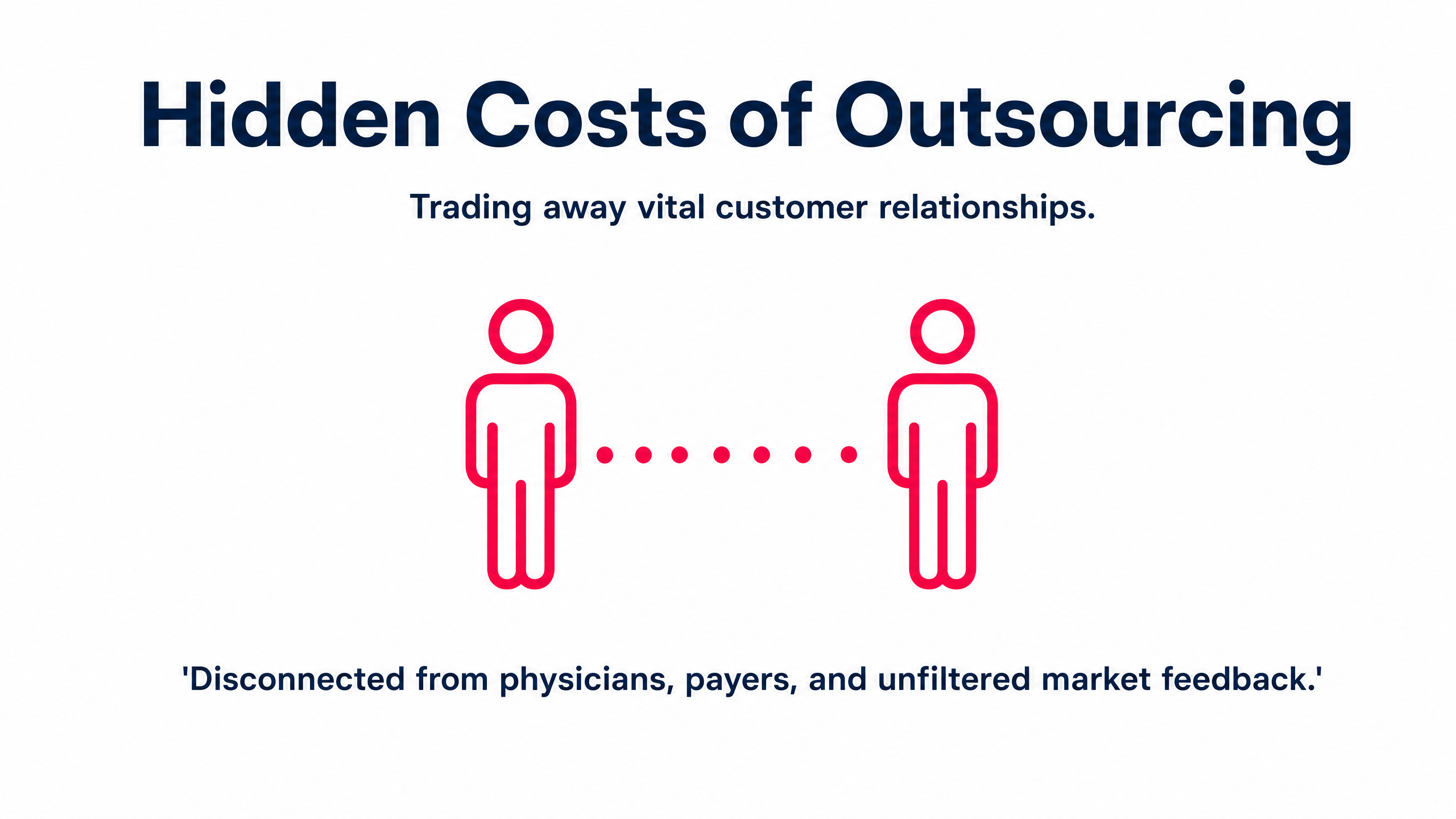
When you operate through a third party, you are one step removed from:
- Physicians and KOLs
- Hospital systems
- Payers and policy influencers
- Real-world patient experience
That distance matters.
Without direct engagement, you miss:
- Unfiltered market feedback on your product’s positioning and usage
- Early signals on competitive threats or shifting treatment patterns
- The ability to adapt your strategy in real time
Over time, this creates a structural disadvantage. You are not truly in the market—you are observing it through someone else’s lens.
From Product Revenue to Market Equity
A distributor can generate sales.
A subsidiary builds equity.
When you establish your own presence in Japan, you are not just commercializing a product—you are building:
- A recognized brand among healthcare professionals
- Direct credibility with regulators and payers
- A platform for future launches
- Institutional knowledge that compounds over time
This is particularly important in Japan, where continuity and reputation carry significant weight. The value of these assets often exceeds the near-term efficiency gained through outsourcing.
Control Drives Better Decisions
Operating directly gives you control over:
- Positioning and messaging in a highly nuanced market
- Pricing and market access strategy
- Medical engagement and evidence generation
- Lifecycle management and indication expansion
In a market with regular price revisions and evolving reimbursement dynamics, this control is not just beneficial—it is critical.
“Japan Is Too Difficult” — Less True Than It Used to Be
Historically, companies avoided direct entry due to perceived barriers:
- Talent constraints
- Regulatory complexity
- Cultural and language differences
These challenges still exist—but they are increasingly manageable:
- Japan is more open to foreign companies than ever before
- Experienced local talent is available, particularly for compelling products
- Regulatory pathways are more transparent with early engagement
In reality, many of the risks associated with building a subsidiary are execution challenges not structural barriers.
When a Direct Model Makes Sense
Building your own subsidiary is not for every company. It becomes compelling when:
- You have a differentiated or high-value asset
- Japan is a strategic, not opportunistic, market
- You are willing to invest with a multi-year horizon
- Customer insight and lifecycle control are critical to success
In these situations, the question is not “Can we afford to build?”
It is often “Can we afford not to?”
A More Flexible Reality: Start Direct, Scale Smart
Direct entry does not mean building everything at once.
Many successful companies:
- Establish a small, focused local team
- Hold key functions (strategy, KOL engagement, market access) internally
- Selectively outsource execution where needed
This approach allows you to own the customer relationship from day one, while scaling infrastructure over time.
The Bottom Line
Japan rewards companies that commit.
If you rely entirely on partners, you may gain speed—but you limit your visibility, control, and long-term upside.
If you build your own presence, you gain something far more valuable:
- Direct insight
- Strategic control
- Enduring market equity
In a market like Japan, those advantages compound and ultimately define who wins.

Common Issues with Japan Distributors & Partners
🔹 Sales & Market Development Issues
- Sales are stagnant or declining despite a growing market.
- Distributor is reactive — they only process orders but don’t grow the business.
- No new customer acquisition strategy or market development plan.
- Poor understanding of competitive landscape and positioning.
- Distributor is passive in lead generation or brand awareness.
- They rely on inbound demand — no outbound activity or selling effort.
- Sales staff seem poorly trained on the product or lack confidence.
- Little or no presence at relevant industry events, conferences, or exhibitions.
- Distributor is focused on easier products in their portfolio, not yours.
- Sales targets are missed consistently, without serious attempts to recover.
- They are not pushing key accounts or KOL engagement.
🔹 Marketing & Communication Failures
- No local marketing strategy — just translation of global materials.
- No digital presence or weak online visibility in Japanese.
- Collateral is outdated, off-brand, or technically incorrect.
- They don’t localize messaging — marketing doesn’t resonate with Japanese buyers.
- Lack of alignment between marketing and sales functions.
- No product launch campaigns — new offerings quietly added to catalog.
- No proactive communication with HQ marketing or sales teams.
- Weak communication cadence — months go by without updates.
- No explanation for performance variances — just excuses or silence.
🔹 Transparency & Data Sharing Issues
- Refusal to share end-customer lists or sales pipeline data.
- No CRM or visibility into sales funnel.
- Sales reports are vague, late, or manipulated.
- KPIs are agreed upon but not tracked or enforced.
- No clarity on pricing strategy, discounting, or margins.
- They don’t share information about competitor activity.
- Regulatory progress (or delays) is unclear or unverifiable.
- Limited or no visibility into inventory, returns, or backorders.
- They do not allow direct contact with key customers or users.
- Concerns that they are misrepresenting your product in the field.
🔹 Strategic Misalignment
- Distributor focuses on volume, while your product requires value selling.
- They treat your product as secondary to others in their portfolio.
- Incentive structures are misaligned with your growth goals.
- They are not willing to co-invest in marketing or sales enablement.
- Unclear or inconsistent positioning of your product in the market.
- They decline to register new indications or versions of your product.
- They block channel expansion or partnerships that could increase reach.
- No interest in evolving to a more strategic partner role.
🔹 Legal & Structural Concerns
- They own the local registration, blocking alternatives.
- They refuse to transfer or share regulatory files or market authorization.
- They claim exclusive rights but don’t deliver exclusive-level performance.
- They insist on long contract renewals with no performance safeguards.
- They resist performance clauses, audits, or visibility rights.
- Concerns they may be working with your competitor under a different brand.
🔹 Cultural & Operational Disconnects
- Avoidance of confrontation — problems are hidden until too late.
- They say “yes” to your face, but do something else later.
- Resistance to change — even small adjustments are “not possible.”
- No escalation process — decisions take too long to travel up hierarchy.
- Internal bureaucracy stifles responsiveness to customers or HQ.
- Reluctance to adopt Western systems like CRM, KPIs, or shared dashboards.
- They filter all communication — blocking or distorting messages from the field.
- Face-saving prevents them from admitting lack of knowledge or capability.
🔹 Support & Training Gaps
- Distributor staff lack technical knowledge of your product.
- No structured onboarding for new sales reps or support staff.
- They don’t offer field support during installations or launches.
- Customers complain about slow or poor post-sale support.
- No investment in technical certifications or continued learning.
- Distributor uses third parties without informing you (sub-agents, dealers, etc.)
🔹 Commercial Misalignment
- They demand deep discounts or rebates without clear ROI.
- They shift commercial risk back to you — refusing inventory or slow payers.
- Price erosion due to poor positioning or channel management.
- Focus on protecting margins instead of growing market share.
- They underprice your product to move stock — harming brand perception.
At Invision Japan, we specialize in helping companies enter, manage, and grow their business in Japan—bridging the cultural gap and aligning local partners for long-term success. Start a consultation

Three Little-Known Facts About the Japan Pharma Market
1. In Japan, a drug can be punished for being too successful
Japan has a little-discussed rule called market expansion repricing. If a drug sells far better than forecast, the government can cut its price mid-cycle—sometimes by 30–50%, outside the normal biennial price revision.
What surprises many outsiders:
- Strong physician uptake can trigger repricing
- Forecast accuracy becomes a regulatory issue
- Some companies deliberately manage the pace of demand to avoid triggering it
Japan is one of the only major markets where commercial success itself is a pricing risk—a reality that quietly shapes launch strategy behind the scenes.
2. Japan can be fast—sometimes faster than the US or EU—if you plan correctly
Japan’s reputation for slowness is outdated. Under pathways like SAKIGAKE, approval timelines can rival—or even beat—Western regulators.
The catch most companies miss:
- Japan prioritizes local clinical relevance, not sheer patient numbers
- A small but well-designed Japan cohort, planned early, can outweigh massive global data added late
- PMDA expects real scientific dialogue, not passive review
Companies that design Japan in early often move quickly. Those that bolt it on at the end usually don’t.
3. Japanese doctors are conservative—until they suddenly aren’t
Physicians in Japan are often labeled “slow adopters,” but the reality is more nuanced:
- Once clinical confidence is established, switching can be rapid and decisive
- KOL consensus matters more than promotional intensity
- When guidelines or society opinion shifts, uptake can spike suddenly
This creates a market where early traction looks quiet—right up until it isn’t, catching global teams off guard.
Why this matters
Japan isn’t mysterious—but it is unforgiving if you misread the signals.
Invision Japan helps foreign pharma and biotech companies navigate these hidden complexities—from pricing and launch strategy to physician behavior and regulatory planning—by combining deep on-the-ground experience with a practical, execution-first approach.
If Japan matters to your pipeline, understanding how it really works is the difference between progress and frustration.

Has Sakigake Delivered on Its Promise?
A Data-Based Assessment of Japan’s Flagship Innovation Policy
When Japan introduced the Sakigake designation system in 2015, the ambition was clear and bold: to position Japan as a global leader in the early development and approval of innovative medical products. Led by the Ministry of Health, Labour and Welfare (MHLW) and the Pharmaceuticals and Medical Devices Agency (PMDA), Sakigake was designed to address Japan’s long-standing challenges of drug lag and declining global relevance in pharmaceutical innovation.
A decade later, Sakigake is frequently cited as evidence of regulatory progress. But has it delivered on its stated goals — not anecdotally, but measurably?
This article examines Sakigake’s objectives, outputs, and real-world impact using publicly available data and comparisons with similar accelerated programs in the U.S. and Europe.
What Sakigake Was Designed to Achieve
Sakigake was launched in 2015 as a pilot under the government’s Strategy of Sakigake and made permanent in 2020. According to official MHLW and PMDA documentation, its objectives were not modest regulatory refinements, but structural change.
At its core, Sakigake aimed to:
1. Promote innovative R&D in Japan
The system was intended to encourage development of breakthrough therapies for serious diseases and unmet medical needs, with a strong preference for products developed first or concurrently in Japan. This Japan-first orientation was meant to strengthen domestic innovation capability and global competitiveness.
2. Enable early or first-in-world approvals
Eligibility requires that development and regulatory submission in Japan occur before or at the same time as the U.S. or EU, explicitly targeting first-in-world or simultaneous global launches.
3. Accelerate regulatory interaction and review
Sakigake provides priority PMDA consultations, assigned review teams (“concierge” support), and shortened review timelines — targeting roughly six months versus twelve months for standard reviews.
4. Provide post-approval incentives
Sakigake designation can make a product eligible for a limited Sakigake-specific pricing add-on at launch. In practice, these premiums are modest, time-limited, and do not materially alter long-term pricing dynamics or global development incentives.
Taken together, these measures were designed to reverse Japan’s historical drug lag and reposition the country as a hub for cutting-edge therapeutic development — not merely faster approvals of externally developed products.
What Has Sakigake Actually Delivered?
Designations and Approvals: The Hard Numbers
During the pilot phase (2015–2020):
- 37 products received Sakigake designation
- 10 products were approved in Japan
- 7 approvals were first-in-world
- Therapeutic focus areas included oncology, neurology, and rare diseases
After Sakigake became permanent, public reporting became less consolidated. Based on PMDA disclosures, academic reviews, and industry analyses:
- By 2021, approximately 10 Sakigake products had been approved
- By 2023, peer-reviewed analyses cited ~13 approvals
- By mid-2025, conservative estimates suggest ~15–20 total approvals, with ~50–60 total designations, including medical devices and regenerative medicine
- First-in-world approvals remain limited, estimated at 7–10 in total
While Sakigake has undeniably enabled some early approvals, the absolute volume remains small, and only one quarter to one third of designations result in approval.
How Sakigake Compares Globally (Pharmaceuticals Only)
To understand Sakigake’s impact, it must be viewed alongside similar accelerated pathways elsewhere.
Accelerated Regulatory Programs – Pharmaceuticals Only (approx. data as of 2022)
| Program | Start Year | Total Pharma Designations | Pharma Products Approved |
| FDA Breakthrough Therapy (BTD) | 2012 | ~500–600 | ~250–300 |
| EMA PRIME | 2016 | ~100–110 | ~20–25 |
| PMDA Sakigake (Pharma only) | 2015 | ~20–30 | ~10–15 |
Even allowing for differences in market size, Sakigake operates at an order of magnitude smaller scale than the FDA’s Breakthrough Therapy Designation. EMA’s PRIME has also designated far more pharmaceutical products.
This disparity reflects developer behavior, not review efficiency. Global pharmaceutical companies systematically integrate FDA BTD and EMA PRIME into development strategies, while Sakigake remains peripheral.
Measured Impact vs. Original Goals
Where Sakigake Has Worked
- Review timelines for designated products have been significantly shortened
- Several therapies achieved first-in-world approval in Japan
- Japan’s average regulatory drug lag narrowed by approximately 2.5 years between 2016 and 2019
- PMDA–sponsor interaction quality has improved for selected programs
Where Sakigake Falls Short
Scale
The number of designated and approved products is too small to meaningfully shift Japan’s position in global pharmaceutical innovation.
Global R&D prioritization
Industry surveys consistently show that U.S. and EU accelerated pathways dominate strategic planning. Sakigake rarely determines where early development occurs.
Drug loss remains unresolved
An estimated ~70% of drugs developed globally are never developed in Japan at all. This “drug loss” is driven primarily by pricing policy, market incentives, and development strategy — none of which Sakigake directly addresses.
Utilization gaps in high-innovation fields
In areas such as oncology, most global breakthrough programs use FDA BTD or EMA PRIME while bypassing Sakigake entirely.
What the Data Really Tells Us
Sakigake has succeeded as a regulatory acceleration tool, but it has not delivered the structural transformation envisioned in Japan’s innovation strategy.
It improves outcomes after a company has already decided to prioritize Japan, but it does little to influence that decision in the first place.
This distinction matters. Drug lag today is increasingly less about review speed and more about whether Japan is included in development at all. On that front, Sakigake has had limited impact.
Conclusion: A Useful Tool — But Failing Its Core Mission
Sakigake demonstrates that Japan’s regulators can move quickly and flexibly when conditions are right. As a regulatory mechanism, it works. As an innovation strategy, it falls short.
If Japan’s objective is to reclaim global leadership in pharmaceutical innovation and ensure timely patient access to breakthrough therapies, regulatory acceleration alone is insufficient. Sakigake must be paired with broader reforms — including pricing stability, incentives for early clinical development, integration into global trial strategies, and policies that materially change Japan’s attractiveness as a development anchor.
Until then, Sakigake remains exactly what the data shows it to be:
a successful tactical policy — but one that has failed to deliver on its strategic promise to Japanese patients.
References (Indicative, Non-Exhaustive)
- MHLW: Strategy of Sakigake policy documents
- PMDA: Sakigake designation lists and review statistics
- JPMA / EFPIA Japan: Drug lag and drug loss analyses
- FDA: Breakthrough Therapy Designation annual reports
- EMA: PRIME scheme public disclosures
- Academic reviews (2019–2024) on Japan regulatory reform and drug lag
Legal Disclaimer
This article is provided for informational and discussion purposes only. The views and interpretations expressed are those of the author alone and do not represent the official positions of any regulatory authority, government body, or organization. While the author has relied on publicly available sources believed to be reliable, no guarantee is made regarding the accuracy, completeness, or timeliness of the information presented. The author assumes no responsibility or liability for any decisions made based on this content.